By the QuantonTools Team
Solar panels on rooftops are boring. They sit there quietly, saving money, asking nothing in return.
But solar panels powering a hearse? A plane flying around the world? A floating island shaped like a UFO?
That’s where things get interesting.
Here are the strangest, most ambitious, and most inspiring things humans have ever powered with the sun.
The Solar-Powered Hearse (Yes, Really)
In 2021, a funeral director in Stellenbosch, South Africa, converted a Nissan Leaf into what is believed to be the world’s first solar-powered hearse.
Pierre Marais of Sonja Smith Funerals wasn’t trying to make a statement about renewable energy. He was trying to solve a practical problem: South Africa experiences frequent load-shedding (rolling blackouts), and he needed a hearse that could operate reliably regardless of the grid.
His solution: a Nissan Leaf electric vehicle fitted with solar panels on a trailer that charges the vehicle during the day. The setup generates enough power to cover approximately 30-50 kilometers (18-31 miles) of driving daily — enough for most local funeral services.
The solar hearse has since become a minor celebrity in South African media. Marais reports that families often specifically request “the green hearse” for their loved ones’ final journey.
The symbolism is hard to miss: even in death, there’s a way to honor the planet.
Solar production estimate: approximately 1.5 kW of panels on the trailer, generating roughly 6-9 kWh per day in South African sun — enough to offset the hearse’s daily energy consumption for short trips.
Solar Impulse: The Plane That Flew Around the World (Without a Drop of Fuel)
This is arguably the most ambitious solar-powered project in history.
In 2015-2016, Swiss pilots Bertrand Piccard and André Borschberg flew a solar-powered aircraft called Solar Impulse 2 around the entire planet — covering 42,000 kilometers (26,000 miles) over 17 legs, crossing four continents, two oceans, and staying aloft for up to five consecutive days and nights.
The aircraft’s mind-bending specifications:
- Wingspan: 71.9 meters (236 feet) — wider than a Boeing 747
- Weight: 2,300 kg (5,100 lbs) — about the weight of a Ford Explorer
- Solar cells: 17,248 monocrystalline silicon cells covering the wings and fuselage
- Solar capacity: 66 kW peak (equivalent to about 165 typical residential panels)
- Battery storage: Four lithium-polymer batteries totaling 164 kWh
- Cruise speed: 70-90 km/h (43-56 mph) — roughly the speed of a car on a country road
- Maximum altitude: 8,500 meters (28,000 feet)
The solar cells covered every available surface of the aircraft. During the day, they powered four electric motors and simultaneously charged the batteries. At night, the batteries kept the plane aloft until the next sunrise.
The longest single leg — Nagoya, Japan to Kalaeloa, Hawaii — took 117 hours and 52 minutes (nearly five full days) of continuous flight. Borschberg slept in 20-minute intervals while the autopilot maintained course.
Solar Impulse proved something remarkable: you can fly around the world on nothing but sunlight. The practical applications for commercial aviation are still distant (a 747 carries 400 passengers at 900 km/h; Solar Impulse carried one pilot at 70 km/h), but the proof of concept stands.
Solar-Powered Concerts and Festivals
Music festivals consume enormous amounts of electricity — stages, sound systems, lighting rigs, food vendors, and thousands of camping attendees all need power. Traditionally, this means diesel generators running continuously for days.
A growing number of festivals are challenging that model.
Glastonbury Festival (UK)
Glastonbury, the world’s largest greenfield music festival with over 200,000 attendees, has been experimenting with solar power since the 1980s. The festival’s “Green Fields” area has long been powered by renewable energy, and in recent years the main stages have begun incorporating solar into their power mix.
In 2023, the festival installed a 200-panel solar array at Worthy Farm (the festival’s permanent site), generating approximately 70,000 kWh annually. While this is a fraction of the festival’s total energy needs, it powers several permanent structures and offsets a meaningful portion of the farm’s year-round electricity.
DGTL Festival (Netherlands)
DGTL, an electronic music festival in Amsterdam, has gone further than most. Since 2016, the festival has aimed for complete energy self-sufficiency. They’ve achieved approximately 90% renewable power through a combination of solar, wind, and battery storage.
Their most innovative feature: a “solar-powered dance floor” where the kinetic energy of dancing feet supplements the photovoltaic panels. No, the dancers aren’t generating all the power — but the combination of solar and human energy captures the spirit perfectly.
Envision Festival (Costa Rica)
This jungle-set festival runs primarily on solar and biodiesel, with solar arrays providing power for stages, lighting, and vendor areas. The festival’s remote location (no grid connection available) makes solar not just an environmental choice but a practical necessity.
According to the festival organizers, their solar installations generate approximately 15-20 kW of continuous power during daylight hours, stored in battery banks for evening performances.
The Solar-Powered Floating Island
In 2013, an Italian designer named Marco Amato launched what he called “The Floating Solar Island” on Lake Chippewa in Wisconsin — though it looked more like a UFO that had gently crash-landed on the water.
The circular platform, approximately 12 meters (40 feet) in diameter, was covered in solar panels that powered an electric motor, lights, a small sound system, and a mini-fridge. Amato lived on it for periods, calling it a “solar-powered micro-nation.”
The island wasn’t just a stunt. It demonstrated that solar panels can work effectively on water, where the cooling effect of the water beneath them improves efficiency by 5-15% compared to land-based installations (per research from the National Renewable Energy Laboratory on floating photovoltaic systems).
This concept — floating solar, or “floatovoltaics” — has since grown into a serious industry. The Saemangeum floating solar project in South Korea, currently under construction, will generate 2.1 GW (2,100,000 kW) — enough for over 600,000 homes. What started as one man’s floating UFO is becoming a mainstream energy technology.
Amato’s island generated approximately 3-4 kW — enough for its modest needs. Modern floating solar farms use the same principle at utility scale.
The World Solar Challenge: Racing Across Australia on Sunlight
Every two years since 1987, teams from universities and companies around the world converge on Darwin, Australia, for the World Solar Challenge — a 3,000-kilometer (1,864-mile) race across the entire Australian continent, from Darwin in the north to Adelaide in the south.
The rules are simple: Your vehicle must be powered entirely by solar energy. No fuel. No external charging. Just the sun and whatever energy you can capture and store.
The course: The Stuart Highway, which cuts directly through the Australian outback. Temperatures exceed 40°C (104°F). Kangaroos and road trains (massive multi-trailer trucks) share the road. There are stretches of hundreds of kilometers with no services whatsoever.
The cars: They look like something between a spaceship and a bicycle. Flat, aerodynamic bodies covered entirely in solar cells, with a tiny cockpit for the driver. They weigh as little as 150 kg (330 lbs) — roughly the weight of two adults — despite carrying solar arrays spanning 6 square meters.
The performance: The current record for the 3,000 km course is held by the Dutch team Nuon (now Vattenfall) Solar Team at 33 hours and 3 minutes — an average speed of approximately 90 km/h (56 mph). On solar power alone. Across a continent.
Teams use approximately 900-1,200 individual solar cells per vehicle, generating 1.5-2.5 kW of continuous power during daylight hours. The best teams use gallium arsenide cells (the same type used on satellites) with efficiencies exceeding 30% — significantly higher than commercial silicon panels.
The World Solar Challenge has directly contributed to solar car technology that’s now appearing in commercial vehicles. The Dutch company Lightyear, founded by former Solar Challenge competitors, has developed a production solar-assisted car (the Lightyear 0) with integrated solar panels in the roof and hood.
Honorable Mentions: Solar Oddities
The Solar-Powered Cinema (Sol Cinema, UK)
A converted caravan fitted with solar panels that powers a tiny 8-seat cinema inside. It tours festivals and events showing short films about the environment. Total solar capacity: approximately 1 kW. Total charm: immeasurable.
The Solar-Powered Wedding (Various Locations)
Multiple couples have powered their entire wedding — sound system, lighting, catering equipment — using portable solar generators. One couple in California in 2022 ran their entire 150-person wedding (including the band) from a 5 kW solar trailer with battery backup. Estimated energy consumption: approximately 30-40 kWh for the full event. Solar generation during setup and ceremony: approximately 20-25 kWh, with batteries handling the evening.
The Solar-Powered Nightclub (Club Watt, Rotterdam)
A dance club in the Netherlands that installed a “solar-powered dance floor” where piezoelectric crystals under the floor tiles generate small amounts of electricity from dancing feet, supplemented by rooftop solar panels. The dance floor generates a modest 1-2 kW from a full dance floor, while the rooftop array provides the bulk of the club’s power. Total solar installation: approximately 10 kW.
The Solar-Powered Internet (Various)
Off-grid communities from rural India to remote Pacific islands use solar panels to power cell towers and internet routers. According to GSMA (the mobile industry association), over 40,000 telecom towers globally now use solar power, bringing connectivity to communities that were previously off the grid entirely. A typical solar-powered tower uses 3-5 kW of panels with battery storage.
What Could YOU Power With Solar?
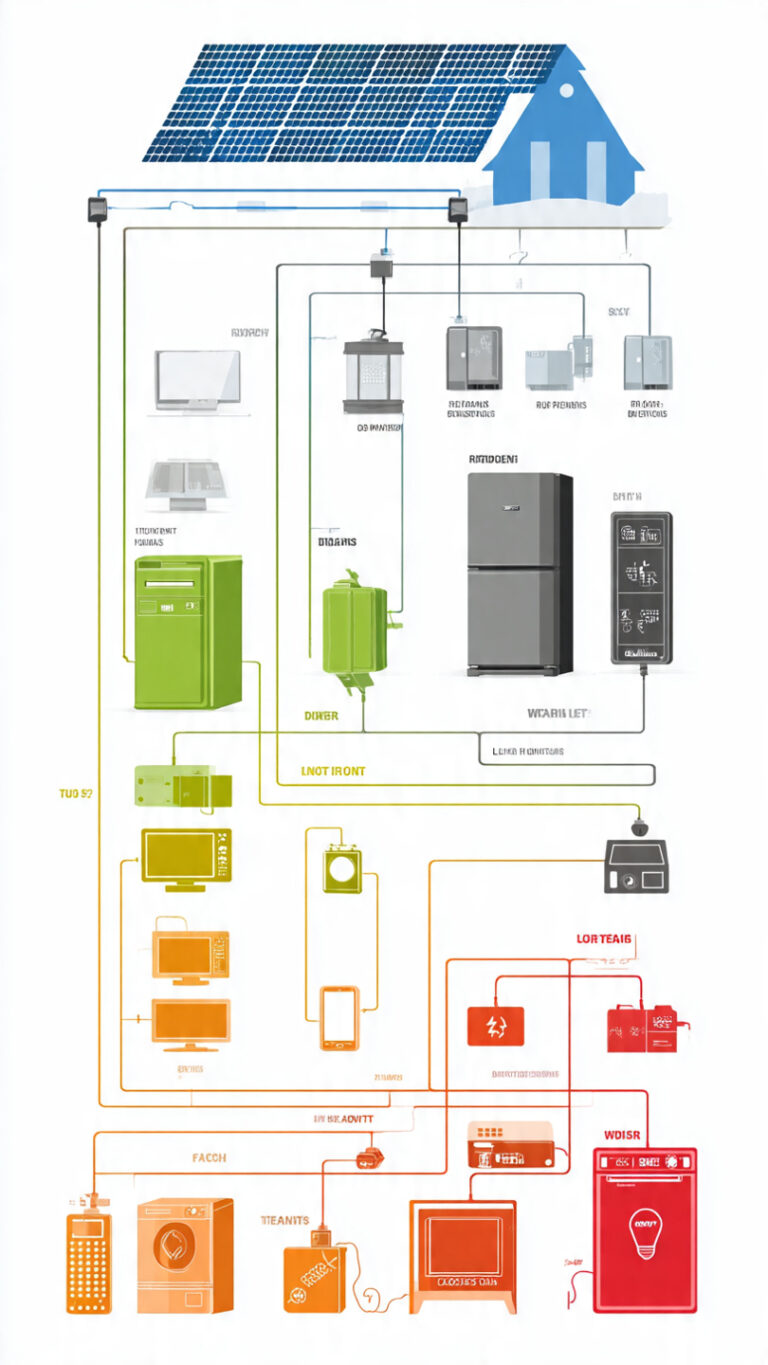
The beauty of solar power is that it scales from a single panel charging your phone to fields of panels powering cities.
Using our Solar Panel Sizing Calculator, you can figure out exactly what your own solar setup could power:
- 1-2 panels (400-800W): Charge all your devices — phone, laptop, tablet, power tools
- 4-6 panels (1.6-2.4 kW): Run a small off-grid cabin with lights, refrigerator, and water pump
- 10-15 panels (4-6 kW): Power a small, efficient home
- 20-30 panels (8-12 kW): Power a typical family home plus an electric vehicle
- 100+ panels (40+ kW): Power a small business or farm
The same math that powered a plane around the world applies to your roof. Just scaled differently.
Related Tools & Articles
| Tool | What It Does |
| Solar Panel Sizing Calculator | Calculate exactly how many panels you need |
| Solar Panel ROI Calculator | See when your panels start paying you back |
| Battery Bank Calculator | Add storage to your system |
| Cable Ampacity Calculator | Size the wires for your installation |
Related blog posts:
- How Many Solar Panels Would It Take to Power Famous Buildings? We Did the Math
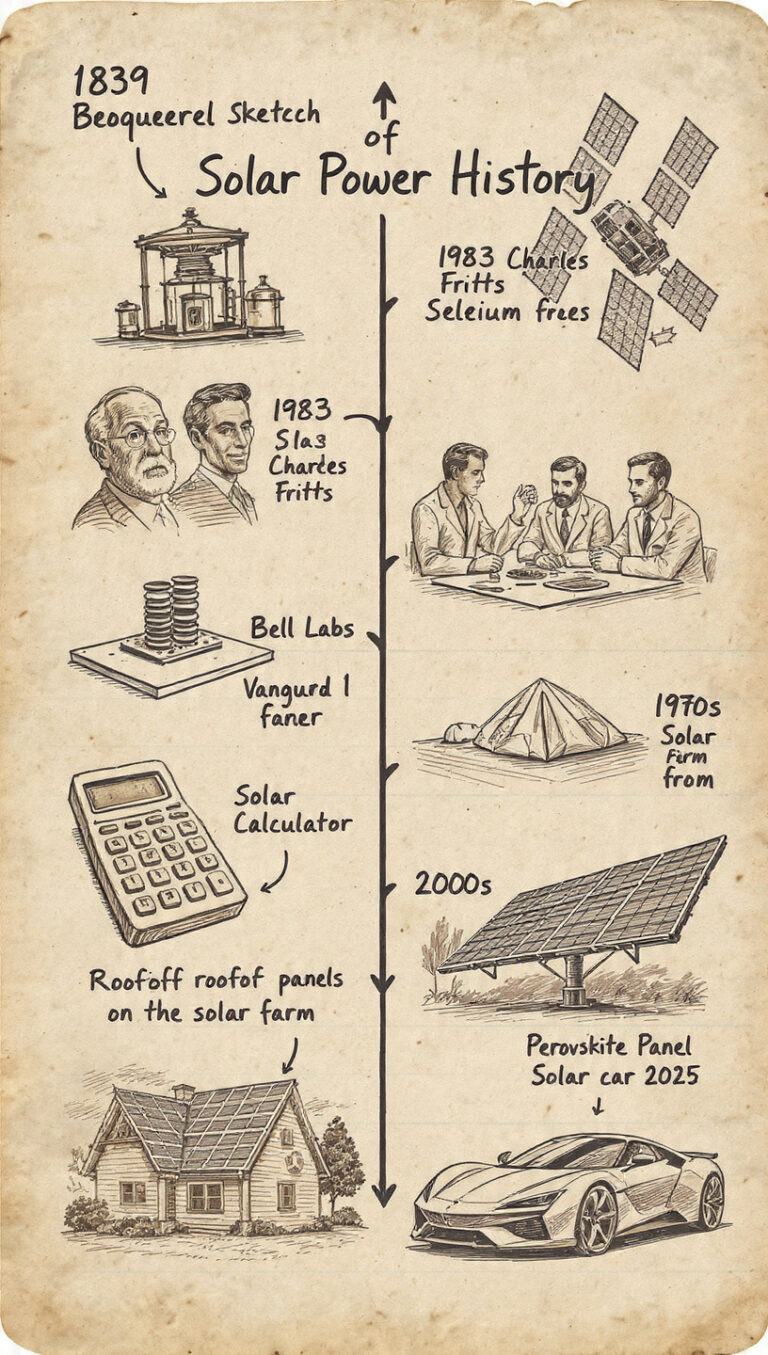
- The History of Solar Power: From 7th Century BC Burning Mirrors to Modern Panels
- What If We Covered the Sahara in Solar Panels? The Math Behind the Dream
- Solar Panel ROI: The Year Your Panels Start Paying You
- Solar Panels at Night? The Moonlight Myth Debunked
This article is for entertainment and educational purposes. Power estimates are approximate and based on publicly available information. Solar Impulse specifications from the Solar Impulse project archives. World Solar Challenge data from the event’s official records. Floating solar research from NREL technical reports.
About the Author